

I have been what most people call a “gamer” for as long as I can remember. It has always been a major part of my life, usually balanced by a healthy (or maybe unhealthy) dose of sports. Back in the day, that meant surviving on zero sleep between late-night World of Warcraft raids and morning classes. While the days of progression raiding are behind me, the WoW itch never really goes away. I still keep an active sub just to casually run around on my Night Elf Druid, or honestly, just to listen to the login music in the background while I am doing something else.
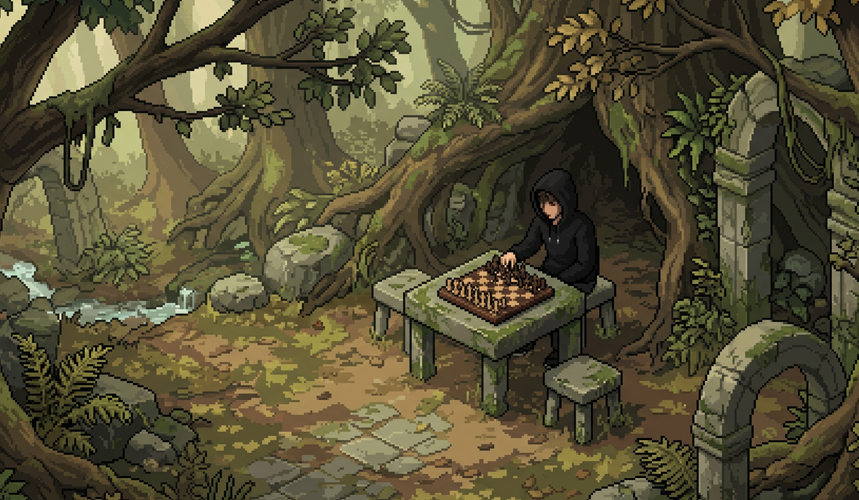
But lately, I have felt a shift. I realized I wanted to spend my time learning chess as an adult instead of just chasing digital loot that resets every expansion. I wanted a skill that actually exists when I am not sitting in front of a monitor.
The Search for a Skill Beyond the Screen
For a long time, Hearthstone was my go-to transition from the MMO grind. I loved the strategy, and I even spent a lot of the lockdown era streaming it. But eventually, the “pay-to-play” cycle got exhausting.
Every few months, a new expansion would drop, and if you did not shell out for new cards, your decks were useless.
It reminded me of playing Magic: The Gathering back in the day, but with one major difference: with Magic, you actually owned the physical cards. In Hearthstone, everything is digital, and you end up destroying your old collection just to afford the new stuff. One day, I just stopped and asked myself: “For what?“.
I wanted something tangible. I wanted to be that person in a movie who walks past a chessboard and casually says, “Knight to a4, checkmate”. It sounds ridiculous, but there is an undeniable “cool factor” to chess that digital card games just cannot replicate.
Embracing the 10,000-Hour Journey
I have had a Chess.com account since late 2020, but I never gave it the respect it deserves. In 2024, I finally set a resolution to take it seriously. I reactivated my account and set up a tracking system to monitor exactly how much time I spend practicing. If you want to master something, you have to put in the hours, and I wanted to see that progress in black and white. (pun intended!)
In 2025, I clocked in 147 hours of chess practice. It is a solid start, but I know I am still just scratching the surface. Better late than never, right? Like the saying goes: “The best time to plant a tree was 20 years ago. The second best time is now“.

For 2026, I am raising the stakes. My goal is to hit 200 hours of chess practice. I thought about setting an ELO goal (a specific rating), but let’s be real: with my current playing volume, that is a bit delusional. Focusing on the hours spent is a metric I can actually control.
Overcoming “Play Button” Anxiety
Here is my biggest hurdle: I love the puzzles, but I am terrified of the “Play” button. I do at least 25 puzzles a day, but when it comes to actual matches, my fear of losing takes over.
I actually chatted with Gemini about this to figure out how to get over that mental block. The advice was surprisingly solid: stop counting wins and start celebrating losses. In chess, you learn more from a defeat than a victory. So, I have set a secondary goal for 2026: I want to lose 100 times.
As of May 2026, I still have 72 losses to go to reach that goal. It sounds counterintuitive, but by aiming for the loss, I am taking the pressure off. Each defeat is just another data point in my skill acquisition routine.
Get going!
Learning chess is the ultimate gamified self-improvement project. It takes the systems I loved in WoW and Hearthstone and applies them to a skill that is respected globally. I am not quite ready for over-the-table matches against strangers yet, but I am working on it.
The “mayhem” in my head is finally finding some order on those 64 squares.
If you see me on Chess.com, feel free to hand me one of those 72 losses I still need.

